
AI Led. Human Supervised.
AI Precision Marketing for Local Businesses

AI Precision Marketing for Local Businesses
Stop Gambling With Your Marketing Budget. See exactly how many clients you can get - before you spend a dime. And if you like the plan, we’ll execute it for you - so you can focus on your business. 100% Done For You Precision Marketing!
You’ll see we’re superior in the first 5min.
4.8

4.5

4.8
500+
Data points analyzed per business
12 mo.
Growth plan with revenue projections
5 min
For full business
analysis
100%
Done For You
Marketing
Easy & Fast Process
Powered by AI, supervised by
Human Experts!

100% Done For You Marketing with Clear Revenue Goals and Timeline
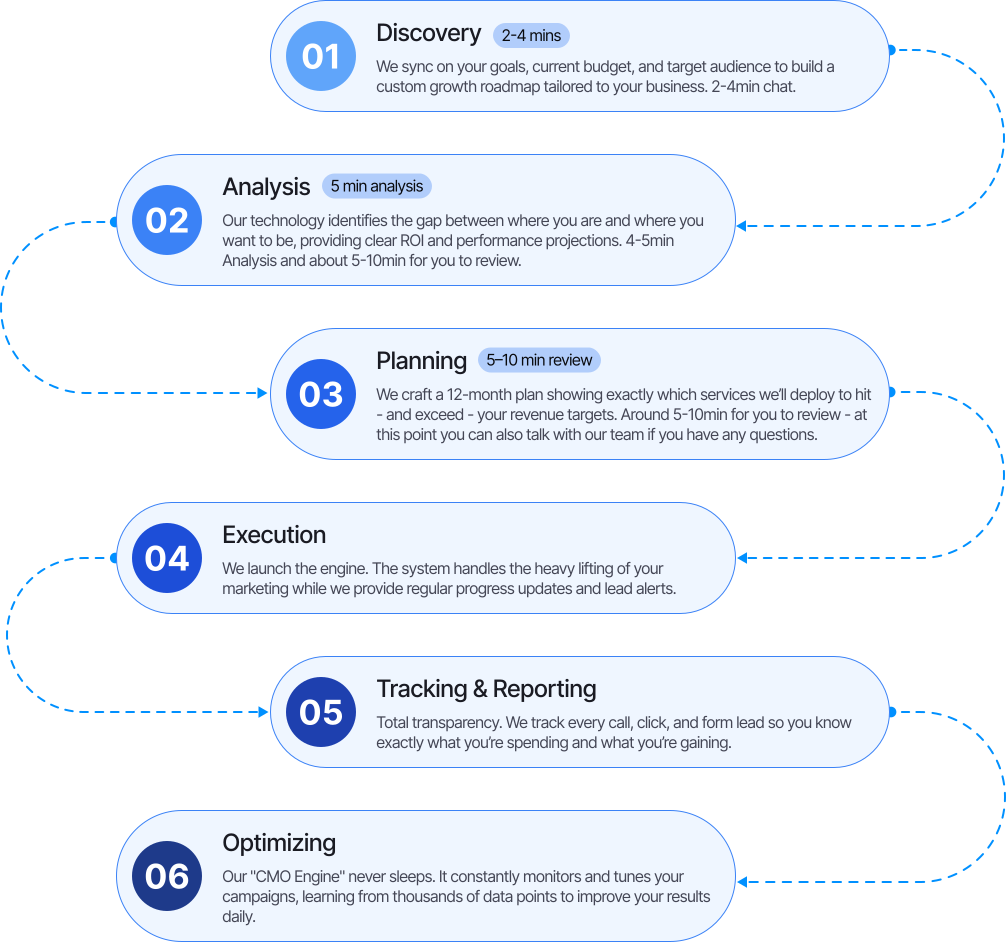
Easy & Fast Process
What our clients say
Real feedback from clients who’ve turned growth into results.
Get Your Free Personalized Gap Analysis and 12 Month Marketing Plan
5 minutes of your time for a full year of clarity. Let's map out
your market dominance.
Easy & Fast Process
All the services local businesses need to hit your goal -
100% Done For You!

We don’t sell services, we sell Revenue Growth, and we use the leading digital marketing solution to get you there in the most cost beneficial way!
From website building and revision, to conversion optimization, SEO, GEO, Google PPC Ads, Google Local Service Ads, Facebook Advertising, Chat bot implementation, Voice bots implementation, CRM implementation, and tracking implementation - everything A-Z to get you high-intent leads and help you convert them to clients.
Search & Performance
High-Conversion Web Design
Professional, mobile-optimized websites built to convert—engineered to turn visitors into high-quality leads and inbound calls consistently.
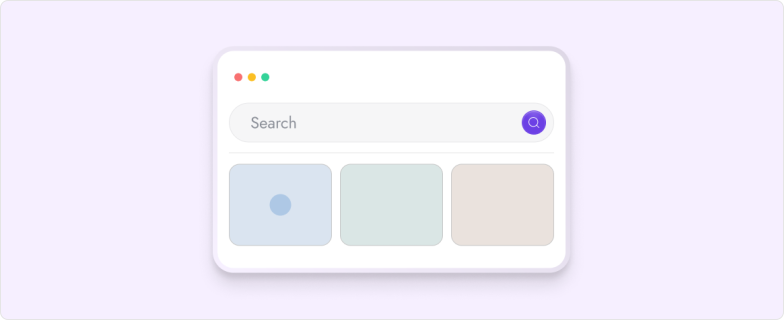
Local "Near Me" SEO
Dominate the Google Map Pack—capture 35%+ of local traffic searching “near me” with high intent to buy.
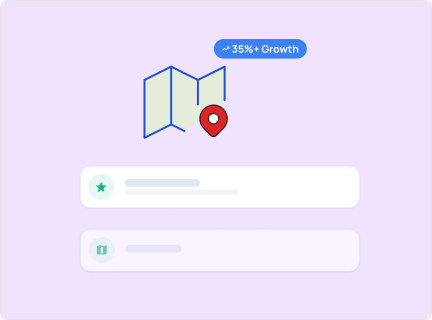
Evergreen SERP Authority
Secure your authority on Page 1 of Google to capture the remaining local search volume and build long-term brand equity.

Generative Engine Optimization (GEO)
Future-proof your business. We optimize your data so AI platforms like ChatGPT, Claude, and Gemini recommend you first.
Targeted Advertising
Google Pay-Per-Click (PPC)
Full-service search management from high-converting pages continuous bid optimization for maximum ROI
Google Local Service Ads (LSA)
Pay-only-for-calls. We manage your "Google Guaranteed" profile to ensure you stay at the very top of the search results.
Precision Facebook Ads
Strategic lead generation and brand awareness campaigns designed to find your ideal customers where they spend their time.
Reputation & Visibility
Automated Review Generation
Build trust on autopilot. Our system invites every customer to leave a review, ensuring a consistent stream of 5-star feedback.
Precision Facebook Ads
Strategic lead generation and brand awareness campaigns designed to find your ideal customers where they spend their time.
24/7 Chat & Audio Bots
Boost onsite conversions without lifting a finger. Our AI-powered bots engage visitors in real time, answer questions, and capture qualified leads around the clock—even while you sleep.
Sales & Attribution
Full-Stack Tracking & Reporting:
Total transparency. We track every call, form, and click so you know exactly which campaigns are driving your revenue. Clear reporting shows what is working, what is not, and where to scale next.
Lead-to-Sale Optimization
We don’t just generate leads—we help you close them, with AI call answering and CRM automation for instant responses and higher conversions.
Our FAQs
Common Questions, Clear Answers
Everything you need to know before you build your first workflow.
What kind of marketing services do you provide?
We provide the marketing needed to get you to your goal. All the services a local business needs - website building and revision, conversion optimization, SEO, GEO, Google PPC Ads, Google Local Service Ads, Facebook Advertising, Chat bot implementation, Voice bots implementation, CRM implementation, tracking implementation, everything A-Z to get you high-intent leads and help you convert them to clients.
How do you project the results?
We do it by combining several key data points:
- We have a LOT of data (from all our clients and data bases we’re connected)
- We have very sophisticated algorithms that take more than 500+ data points into consideration including your niche, location, current marketing status, and much more.
- We look at marketing holistically - gathering all the data about your business before projecting results. From traffic source to conversion units to how you sell and follow up with leads. This comes from 3rd party APIs like Google Ads, DFS, as well as proprietary 1st party data
How fast will I see results?
Every 3/mo. You’ll see a meaningful increase! We build a 12/mo. Marketing plan for you that shows every month exactly what we’ll do and what will be the result. And don’t worry, you are not committed to 12/mo. You can cancel anytime. CTA: Plan Your Growth Now >
Why shouldn’t I work with a human centric agency?
You should - they work with us :-) Having a human in the loop is still important for success. We have humans overseeing our AI and are there to jump if needed.
What if you don’t hit the targets you project?
We win your trust quarter to quarter. Marketing is not foolproof, nothing is, but with us you’ll see meaningful growth constantly and the Return On Investment (ROI) you’re looking for.
Can you estimate how much it would cost to get me a client?
Yes. It’s actually part of the free analysis and marketing plan we create for you before we get started. We show exactly how much on average it will cost to acquire a client. CTA: See Your Real Customer Acquisition Cost >
(This is not a calculator, but a true projection)
How much does it cost? (Pricing)
Get More ClientsFree to start! We’ll chat about your business (2-3min) , run a full gap-analysis that usually takes marketing analysts a few days to complete (in 5min) and craft a full marketing plan to hit your revenue goal. With every month detailing services, budget needed and revenue estimations - all that is free.
The marketing plan will include the cost (budget) of executing the plan. That cost depends on your revenue goal (e.g. add $200K/mo.), current marketing status, market, niche, competition and more.
In any case you’ll have the full cost breakdown, service lineup and revenue projections before spending a dime with us.
I’m worried about working with your system on my own - can you help?
We are a tool, we’re an AI powered autonomous marketing agency, we do all the work for you. You don’t need to design anything, write content or be tech savvy.
Lastly, you can always talk to a human. We have a ‘Talk with a human’ button inside the platform to communicate with an expert human marketer.
What if I need to reach a human?
We’re still here :-) and we plan to stay - contact us.
Do you work with partners and marketing agencies on a white label basis?
Yes we do - checkout the agency website at [aff link]
Have more questions?
The easiest way to resolve them is to build your growth plan. Once ready 90% of your questions will be answered, and the rest we can discuss (There is a ‘Talk with a Human’ button inside).